Smart Ride-Hailing Hub Parking Solution
Make every journey easier by eliminating the wait to find a vehicle
一. Overview
As ride-hailing becomes more common, airports, high-speed rail stations and other major transport hubs face a serious people-to-vehicle matching problem.
Passengers cannot find their vehicles and drivers cannot find their passengers, causing congestion and disorder in waiting areas and damaging the travel experience.
This solution combines smart hardware, a management platform and data linkage. It connects the city big-data centre,
ride-hailing platform and car-park management system to manage the complete process from vehicle entry and dispatch, parking guidance and passenger vehicle finding to exit control.
二. Core pain points
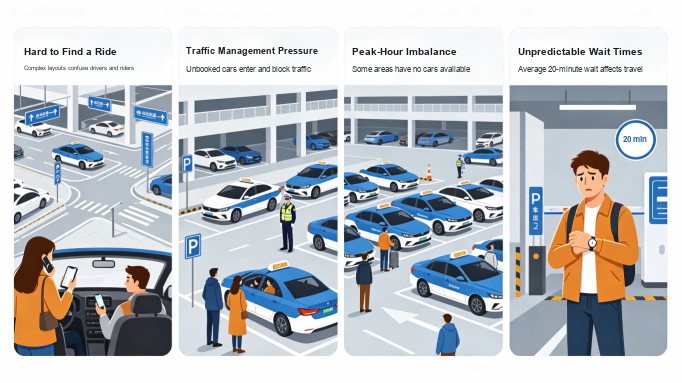
Passengers cannot find vehicles: Complex layouts make it difficult to locate the vehicle quickly, creating confusion between drivers and passengers.
High pressure on order management: Ride-hailing vehicles without orders enter at will or occupy traffic lanes. During peaks, dispatch is unbalanced,
leaving some areas oversupplied and others without vehicles.
Uncontrolled waiting time: Average passenger waiting time can exceed 20 minutes, affecting the travel experience and hub efficiency.
三. System components
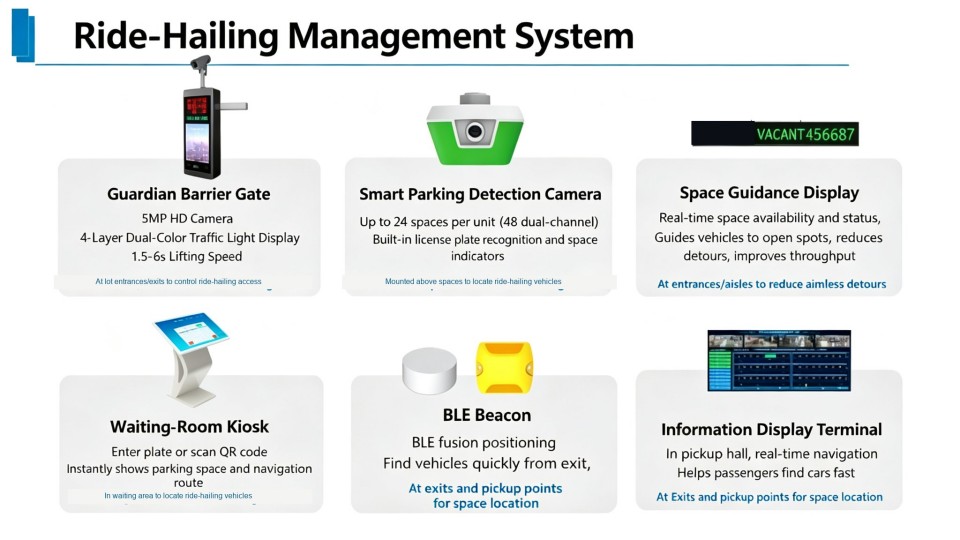
The solution combines the core devices below into one intelligent management system.
四. Business process
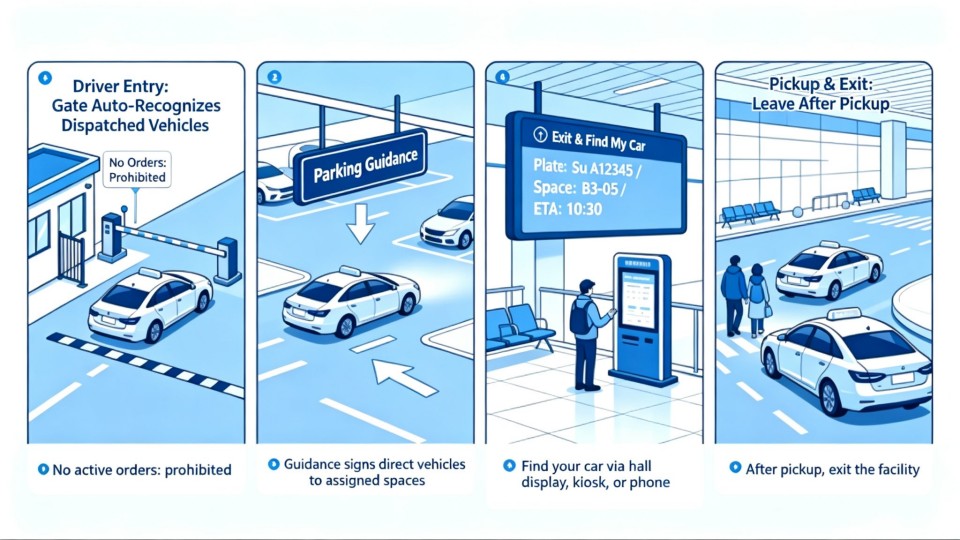
Driver accepts an order and enters: The barrier automatically recognises a ride-hailing vehicle with an active order and allows it through.
Vehicles without an order are denied entry.
Guided parking: Guidance displays direct the vehicle to its assigned waiting space.
Passenger exits and finds the vehicle: A large screen in the waiting hall shows the plate number, space number and estimated arrival time.
The passenger can use a self-service terminal or phone navigation.
Passenger and driver meet and exit: The vehicle leaves after the match is complete.
五. Core functions
5.1 Space guidance
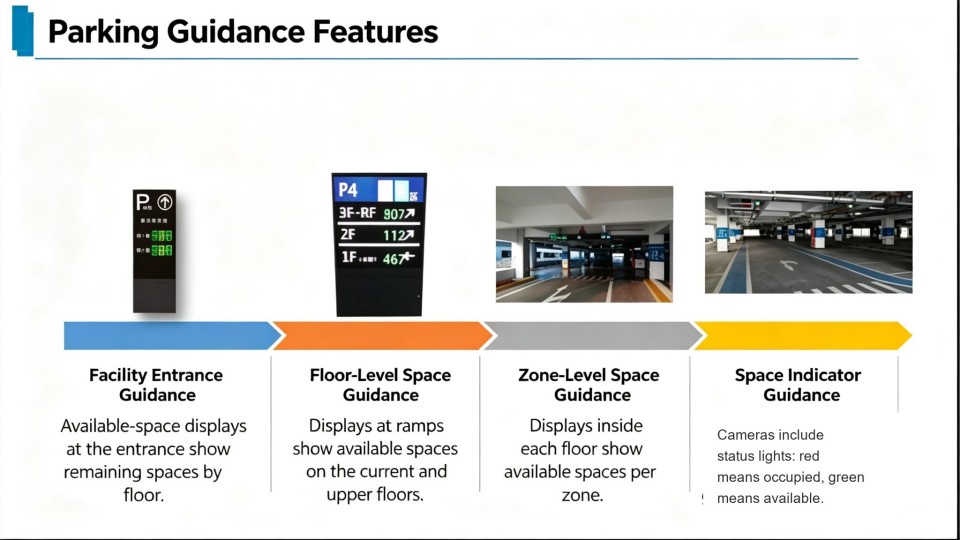
Multiple levels of guidance form a continuous route:
Entrance displays show available spaces on each floor.
Floor displays at ramps show spaces on the current and upper floors.
Area displays inside the car park show available spaces in each area.
Red and green indicators on the camera above each space show occupied and available status.
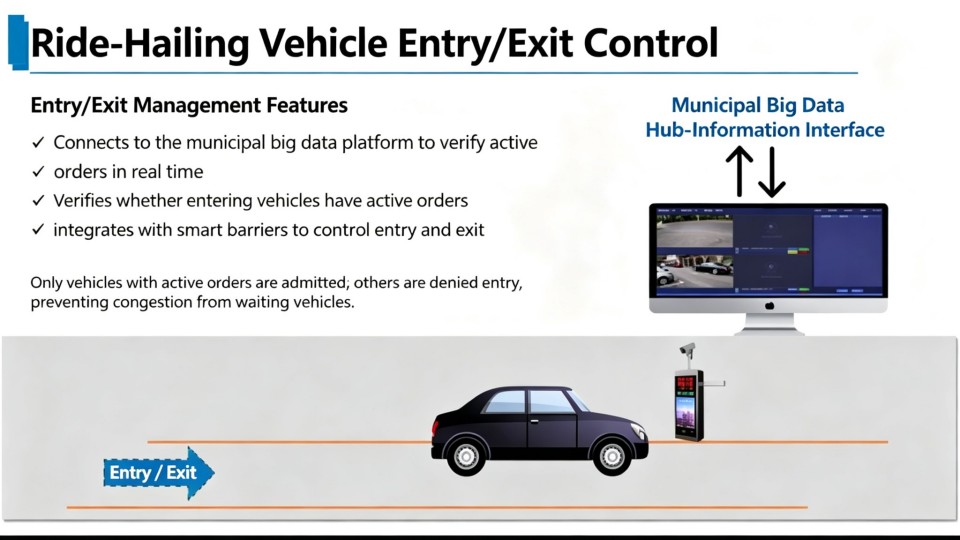
5.2 Intelligent entry and exit control
The core principle is “equipment recognition instead of manual judgement.”
Connects to the city big-data centre and the ride-hailing platform to obtain active-order information in real time.
At entry, automatically determines whether a vehicle has an active order and links to the smart barrier: active order means entry; no order means denial.
Prevents vehicles without orders from waiting inside the site and causing congestion.
5.3 Space-guidance display system
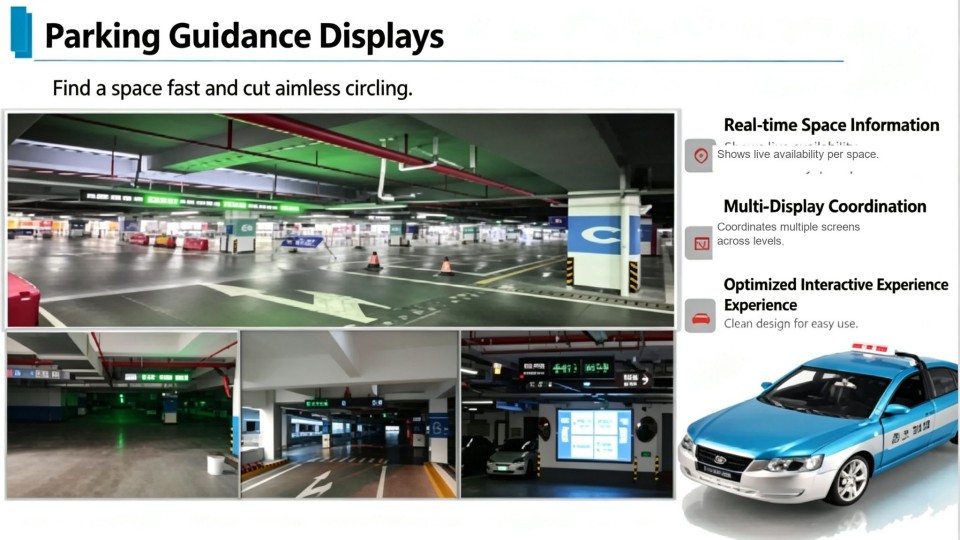
Real-time information: Displays update area availability and parked-vehicle information dynamically.
Multi-display coordination: Multiple guidance screens at entrances, exits and transfer corridors provide a visible route from entry to parking.
Readable interaction: High-contrast colours and large type identify area numbers, available spaces and directions, including at night.
5.4 Parking control and irregular-parking alerts
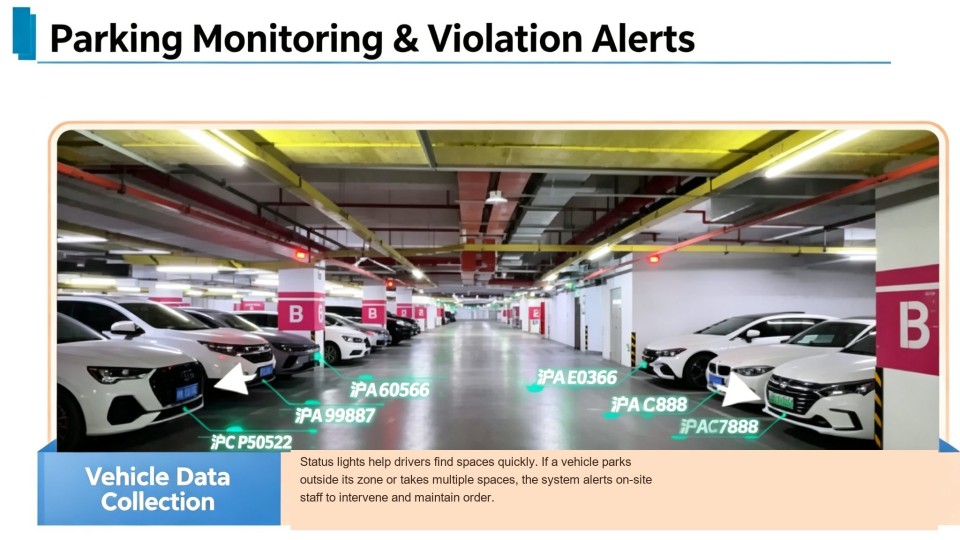
HD vehicle cameras monitor dedicated ride-hailing spaces and upload data to the back-end platform.
Indicators above the spaces help drivers locate an available space by colour.
The system immediately alerts staff when a vehicle parks outside its designated area or occupies multiple spaces.
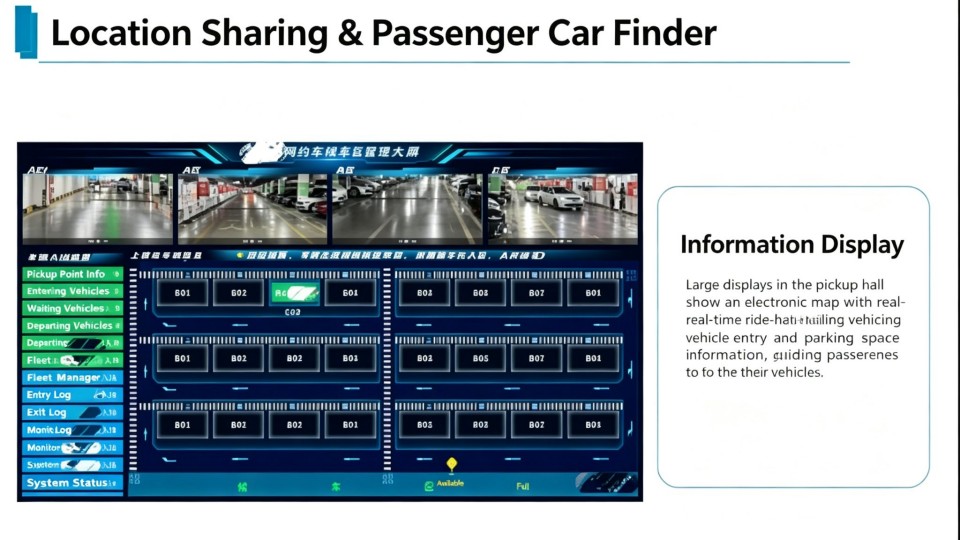
Large screens in the waiting hall show ride-hailing plate numbers, space numbers, estimated arrival times and boarding points.
An electronic map displays vehicle entry and parking positions in real time so passengers can locate vehicles quickly.
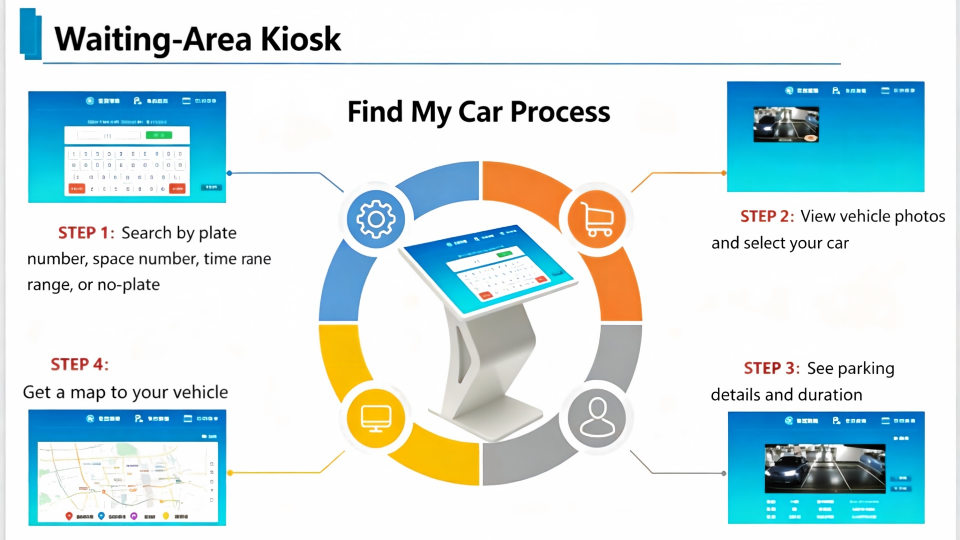
5.6 Self-service reverse vehicle finding
Passengers can use a self-service terminal in the waiting area:
Search by plate number, space number, parking-time range or unlicensed-vehicle condition.
Review the generated vehicle images and select the vehicle.
View parking details, including space and parking time.
Generate a route map to the vehicle.
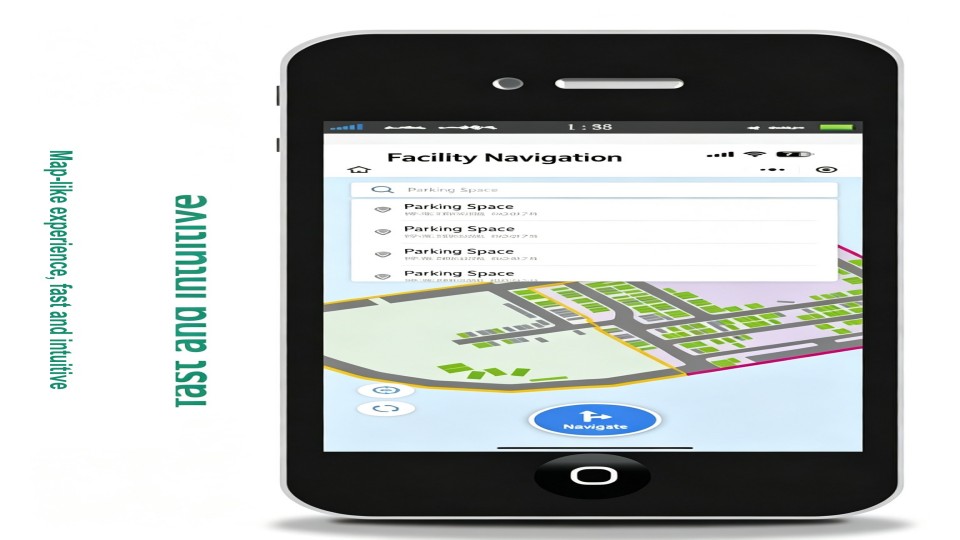
5.7 Site-wide dynamic vehicle-finding navigation
Seamless indoor and outdoor navigation: Bluetooth beacon positioning provides continuous navigation from the passenger
exit through the underground car park to the ground-level pick-up area.
Multiple route options: Fastest route, accessible route and low-stair route options support different needs.
Real-time vehicle-position updates: The route adjusts as the vehicle moves. If the vehicle changes spaces, the system replans automatically.
Precise positioning workflow: Search by plate -> locate the vehicle -> locate the passenger's phone -> plan the route -> provide guidance.
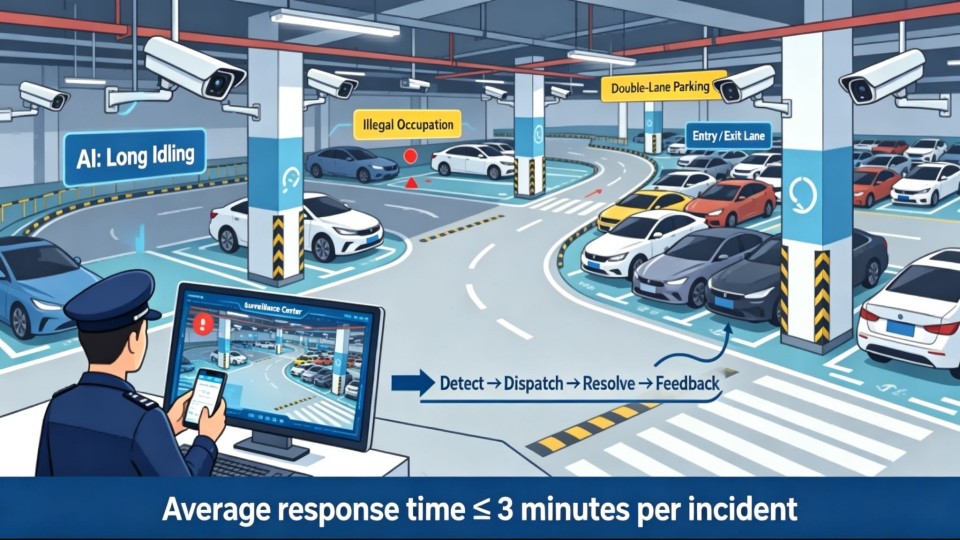
5.8 AI video alerts in parking areas
All-round camera coverage of entrances, exits, turns and dense parking areas
AI recognition of long stays, illegal lane changes, double parking and other abnormal behaviour
Alarm images pushed to the command-centre screen and patrol handheld terminals within five seconds
Closed-loop handling: detection -> task assignment -> response -> feedback, with average response time controlled within three minutes per event
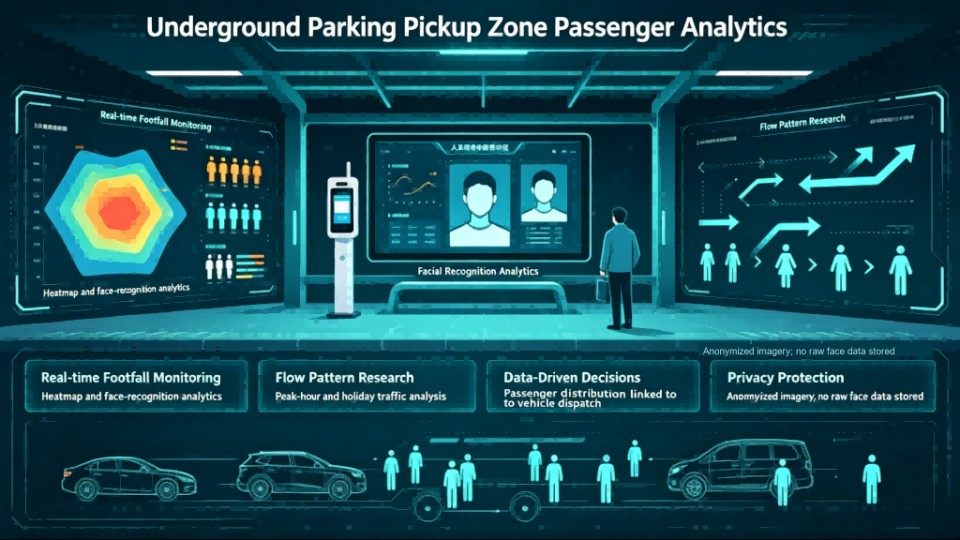
5.9 Passenger-flow data collection
Real-time passenger-flow monitoring: Heat maps and face-recognition statistics show waiting-area density and support cleaning, security and service-resource allocation.
Flow-pattern analysis: Analyses time-of-day and holiday patterns, predicts peak areas and supports advance deployment of staff.
Data-driven dispatch: Links passenger distribution with vehicle dispatch to move from “people waiting for vehicles” to “vehicles waiting for people.”
Privacy protection: Collected images are desensitised, original face data is not stored, and the design follows network-security classified-protection requirements.
六. Implementation and maintenance assurance
Phased implementation
Phase 1: Complete hardware deployment and launch basic functions.
Phase 2: Connect external platforms and conduct pilot operation.
Phase 3: Optimise and roll out the full solution.
Operations and maintenance
Professional team of technical staff, customer-service staff and site administrators, with regular emergency drills and technical training
24/7 response; ordinary faults answered within 30 minutes and major issues handled on site within two hours
Monthly operating reports covering matching efficiency, fault rate and satisfaction to guide continuous improvement
七.Expected outcomes and metrics
| Metric | Target | Description |
|---|
| People-to-vehicle matching efficiency | Increase by at least 30% | 90% of passengers complete the match within 10 minutes |
| Passenger waiting time | 20 minutes -> 8 minutes | Significant improvement in travel experience |
| Traffic order | Congestion index down 25% | Fewer irregular stops and unproductive circulation |
| Traffic accident rate | Down 15% | Intelligent control reduces risk |
| Passenger satisfaction | At least 95% | Quarterly survey incorporated into performance assessment |